
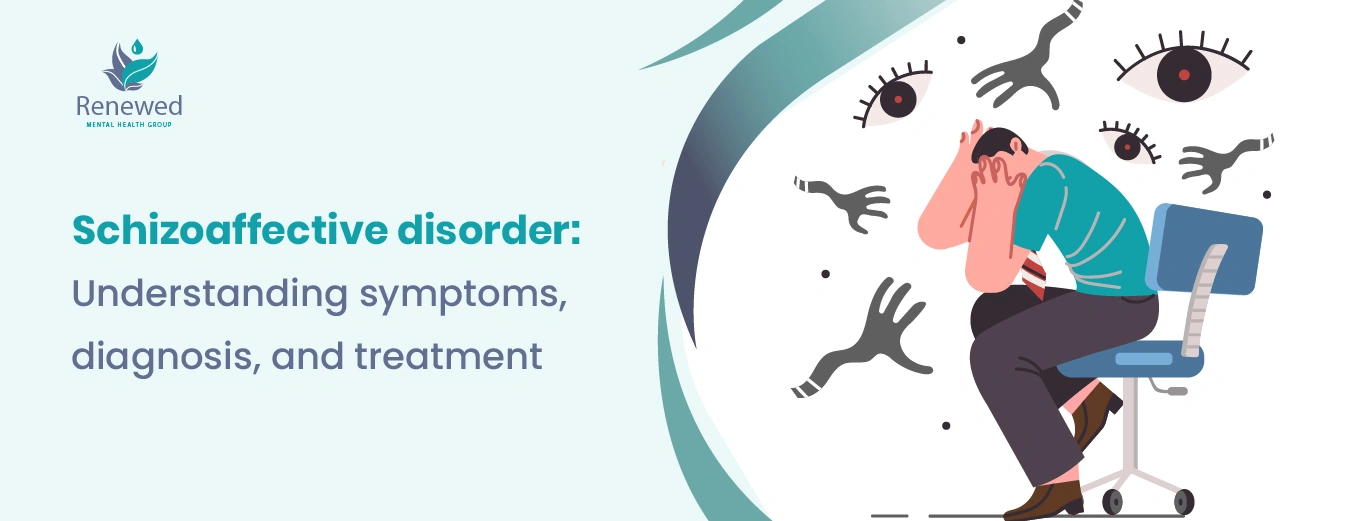



Do you ever feel that people are causing trouble or trying to harm you? Or, have you experienced any strange things in your life that you can’t explain?
If yes, you might be experiencing Schizoaffective disorder.
It is a chronic mental health condition that has the symptoms of both mood disorder & schizophrenia. Individuals in this state experience hallucinations, delusions, mania, hypomania & depression.
It is rare and can affect 3 in every 1000 people around the world. Men and women experience this condition at similar rates, though men may develop it earlier.
However, it is often misdiagnosed as bipolar disorder or schizophrenia. Living with this condition is extremely tough, but it can be managed with the right combination of medication & therapies.
What is Schizoaffective Disorder?
It is a chronic mental health condition that has mixed symptoms of psychotic disorders and mood disorders. It is one of the most misunderstood mental health conditions & affects every individual differently. It severely affects everyday life activities, such as work & relationships with friends and family members.
Moreover, individuals experiencing this condition feel alone & experience reality in an unusual way. They see and hear things that cannot be seen by anyone else, with extreme highs and lows of depression.
3 Types of Schizoaffective Disorder
This condition is distinguished into two main types, which include:
1. Psychotic type
Individuals see and hear things that have no connection with real life, such as hearing voices, seeing things, and having delusions.
2. Bipolar type
People in this particular state experience drastic mood swings; sometimes they are extremely low, extremely high, and sometimes major depressive disorder.
3. Depressive type
Individuals experience only lows and remain sad & hopeless most of the time.
Signs to Recognize Schizoaffective Disorder
If the symptoms stay for more than two weeks, you might be experiencing this condition. Here are some of the common signs that can be helpful!

1. Psychotic Symptoms
- Hallucination
- Delusions
- Trouble organizing thoughts
- Remain in fear and confusion most of the time
- An irrational suspicion that others might harm them.
2. Mood Symptoms
- Extremely sad
- Crying
- Hopeless
- Muscle pain
- Racing thoughts
- Irritated
- Engaging in risky behaviors
- Suicidal thoughts
3. Cognitive Symptoms
- Appetite changes
- Trouble with managing everyday routine tasks
- Difficulty concentrating on tasks
- Changes in the sleep cycle
Top 4 Risk Factors of Schizoaffective Disorder?
The exact cause is not fully understood, but there are some factors that may increase the chances of developing this disorder. These include:
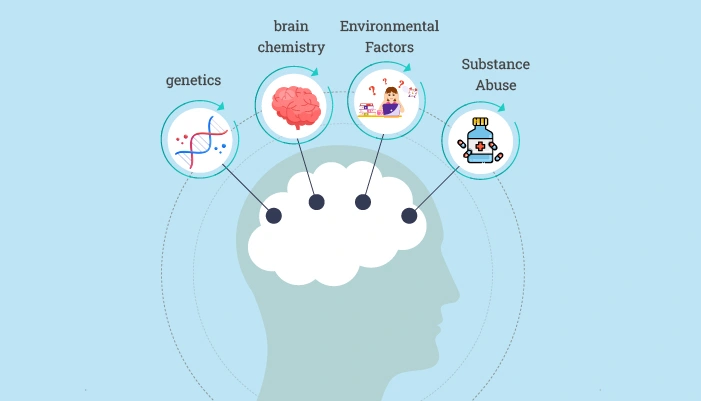
1. Genetics
It is a heritable condition that runs in families. If anyone in your family or any blood relation has experienced schizophrenia, bipolar disorder, or schizoaffective disorder, there is a high chance that you may also develop this condition.
2. Brain Chemistry
People who have imbalances in brain chemicals, such as dopamine, serotonin, Norepinephrine, or Glutamate, are vulnerable to developing this condition. However, abnormalities in these chemicals affect cells that help in communication & eventually lead to the development of this condition.
3. Environmental Factors
People who have experienced extreme stress, a traumatic event, especially in childhood, migration, or have experienced any infectious illness, are vulnerable to developing this condition.
4. Substance Abuse
Excessive use of substances can significantly affect the brain. Individuals who take alcohol, cocaine, marijuana, or smoke excessively are more prone to developing psychotic disorders.
Diagnoses
Diagnosing this condition can be tough because of the overlapping symptoms of schizophrenia and bipolar disorder. It can be done by a mental healthcare specialist after examining the symptoms. The psychotic symptoms must occur for more than two weeks and even in the absence of depressive symptoms.
Moreover, an expert uses the Diagnostic and Statistical Manual of Mental Disorders (DSM-5) criteria to diagnose the exact condition.
However, individuals who take substances often confuse the diagnosis, as intoxication can imitate both psychotic and mood symptoms.
Professional Treatment
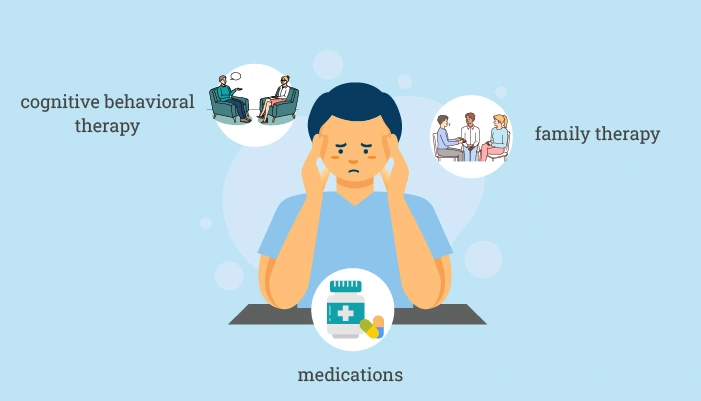
It is a chronic and debilitating condition. No one can fully recover from this condition, but it is highly manageable with the right combination of medication, psychotherapy, or a combination of medication approaches. Many individuals have seen positive outcomes after getting the treatments.
1. Medications
Medication can be prescribed by a mental health expert after examining the exact cause and diagnosing the root cause. Here are some of the common medications:
- Antidepressants
- Antisphycotics
- Mood stabilizers
2. Psychotherapeutic Modalities
Psychotherapy is a talk therapy in which a mental health expert gives general counseling for support. Here are some of the common therapies that can be helpful:
1. Cognitive Behavioral Therapy
CBT is an evidence-based approach that has proven effective for treating psychotic disorders, mood disorders, and other conditions. It changes the thought process, feelings, behavior & targets unsettling thoughts and beliefs into helpful ones. It provides coping skills that help in challenging delusional thinking.
2. Family Therapy
Family members are often affected by the demands of the member living with schizoaffective disorder. The other members of the family need to be educated about the condition and how to help them in times of crisis. Therefore, in family therapy, a mental health expert involves the family members in the therapeutic process.
3. Peer Support
The main motive of peer support is to offer support in a group setting. It reduces the stigma and isolation and improves the recovery process. Peers who are struggling with similar disorders, or those who have recovered already, encourage others to get their treatments. Additionally, it improves social skills and quality of life.
Explore Expert Mental Health Solutions at Renewed Mental Health Group
Do you remain sad most of the time? Or do you see, hear, and talk to things that others can’t?
It can be a sign of Schizoaffective disorder. It is important to get the right medications to live a happy and fulfilling life.
At the renewed mental health group, our highly expert team of mental health professionals treats a wide range of conditions, including ADHD, bipolar disorder, and more. You will get compassionate treatment in a safe and nurturing environment & live a quality of life.
Book a consultation now!
Outlook
It’s a challenging condition that severely impacts relationships with family members and professional life. Individuals in this particular state experience a mix of symptoms of mood disorders and schizophrenia disorder, which eventually causes complications in the diagnosis.
Individuals experience hallucination, delusions, remain sad, have trouble concentrating, or exhibit unusual behavior.
However, it can be managed with the help of professional support. A mental health expert diagnoses the condition and recommends medication and therapies to reduce the symptoms. The diagnosis can be done by using DSM-5 criteria.
A mental health expert sometimes uses one or more therapies and medications to get the desired outcome.