



Do you feel trapped in the loop of constant worry that is uncontrollable? Or are these anxious thoughts taking a toll on your life? You might be experiencing generalized anxiety disorder!GAD is a form of anxiety that affects millions of people Worldwide and negatively impacts everyday life activities. Individuals experiencing GAD have physical symptoms like fatigue, tiredness, or irritability.
Fortunately, it is highly treatable with cognitive behavioral therapy. CBT emerged as the most effective and tested treatment option for managing the symptoms of generalized anxiety disorder. This article provides insight into what GAD is, common avoidance, and what CBT is, and CBT techniques that help in managing GAD.
What is Generalized Anxiety Disorder?
A common mental health disorder that causes persistent worry, stress, and fear, even about the least important things. People experiencing GAD get excessively worried about health, work, commitments, and finances. It causes physical symptoms, such as muscle pain, irritability, and tiredness. People living with GAD have a challenging life as they have difficulty managing relationships with friends & partners.
Common avoidances in Generalized anxiety disorder
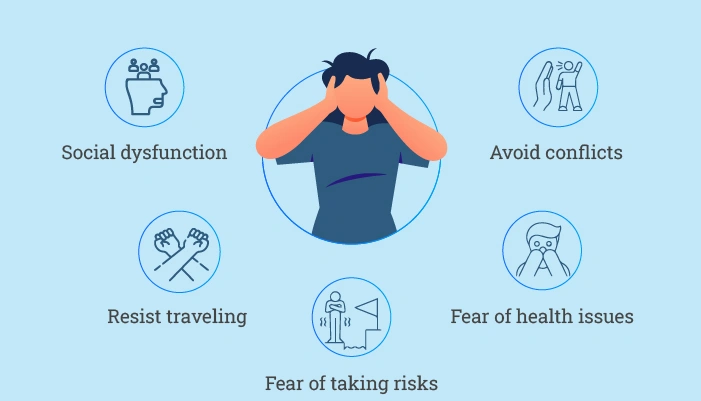
Individuals experiencing GAD tend to avoid situations that might increase their anxiety. However, it’s a short-term coping mechanism.
Here are some of the avoidance behaviors:
- Sidestep conflicts
- Social dysfunction
- Withdraw from work
- Avoid watching sensitive news
- Resist traveling
- Fear of health issues
- Fear of taking risks
What is Cognitive Behavioral Therapy?
Cognitive behavioral therapy is a type of psychotherapy that is goal-oriented and provides structure for negative thoughts and patterns. CBT was developed by Dr. Aaron T. Beck in the 20th century. The core principle of CBT is that our thoughts influence our feelings & actions, which further leads to psychological distress in everyday life. CBT targets unsettling thoughts and beliefs by intervening in thoughts and behaviors and changing them into helpful ones. Moreover, by changing our thought patterns, we can live a healthy and stable life
Explore More: Can Depression Be a Disability? And where to find Help?
What are the CBT techniques that help in managing GAD?
Here are some of the key techniques that help manage GAD.
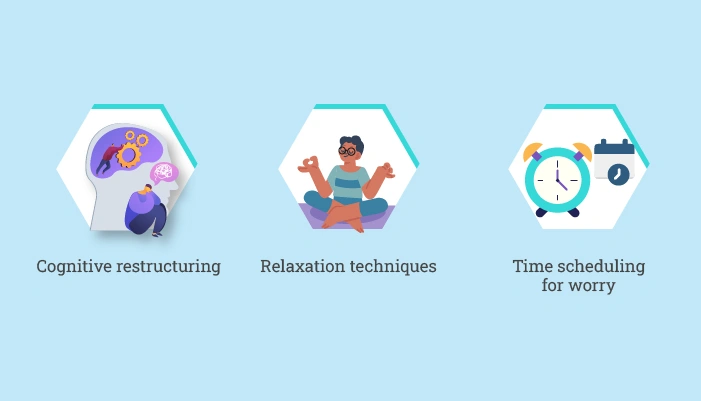
1. Cognitive restructuring
People struggling with GAD often remain in a trap of unhelpful thoughts. This technique helps individuals identify the negative thought patterns that trigger worry and anxiety. Individuals in this technique get to know that these thoughts are irrational and they change into helpful ones.
Reconstructing your thoughts into positive actions can help in reducing the symptoms of GAD. For example, if you have a test tomorrow, and you think that “I might fail,” this thought consistently causes anxiety. You can reconstruct your thoughts by saying, ‘There are possible chances that I may pass it this time.’
2. Exposure techniques
Individuals with generalized anxiety disorder tend to avoid the situations that trigger their anxiety. Exposing them to their fears helps in overcoming the fear and anxiety. To overcome these feared situations, a mental healthcare specialist helps individuals to confront their fears in a safe environment. This exposure can be done through virtual reality, imagination, or by making the individual experience their fears in a safe setting.
Mindfulness and Acceptance Strategies
Mindfulness activities help in focusing on the present moment. It’s a very useful technique for people who worry about the future. It can help individuals maintain a healthy relationship with their anxious thoughts. People with GAD can better understand and accept their fears by practicing mindfulness. It involves cognitive restructuring by improving emotional regulation and reducing worries.
1. Worry awareness training
This training helps individuals to know the difference between productive and useless worries. It helps them to be more aware of their thoughts so that they get to know unproductive worries, and they can interrupt them.
2. Relaxation techniques
Relaxation techniques like deep breathing, muscle relaxation, or imaginary visuals can be helpful as GAD causes muscle tension and fatigue. Relaxation techniques combined with a combination of CBT help enhance the treatment effectiveness and calm the body.
3. Time scheduling for worry
Individuals with GAD struggle with unproductive thoughts for the whole day. This technique helps in setting a time limit for worries, such as giving 30 minutes to think about your anxious worries. However, if the unhelpful thoughts are still occurring at other times of the day, try to change them.
Access Cognitive Behavioral Therapy with compassionate experts at Renewed Mental Health Group
If you are struggling to manage the symptoms of GAD and are looking for CBT experts. You are at the right place! At Renewed Mental Health Group, we understand how GAD can impact your life, and we are here to help by offering exceptional care. We have a team of board-certified psychiatrists and skilled therapists who specialize in providing cognitive behavioral therapy.
We’ll help you harness the power of CBT to achieve lasting change. You will get the treatment that is tailored to the severity of your condition. We provide treatments for a variety of mental health conditions, such as ADHD, Bipolar disorder, anxiety, and more. You can get accessible and effective care that suits you the best, whether you prefer online or in-person appointments.
Make a change today by booking your appointment at + (714) 361-0898
Closing Thoughts
Cognitive behavioral therapy is one of the most effective and gold standard treatments for treating Generalized anxiety disorder. CBT helps in changing the negative thought patterns into helpful ones by intervening in the thoughts. Some of the key principles of CBT that help in managing thoughts are cognitive restructuring, mindfulness activities, exposure therapy, problem-solving, worry, & awareness training, and relaxation techniques. Yet, understanding your thought patterns can help you to get out of the cycle of GAD and live a happy, fulfilling life. Cognitive behavioral therapy can be used alone for and sometimes combined with medications, it solely depends on the severity of the condition.