



Is your child avoiding going to public places, playdates, or refusing to speak in class?
It’s normal to feel shy or become nervous before any school event or playdate with a group of friends. But what happens if the shyness becomes so persistent that it causes physical symptoms like fatigue, stomachache, or nausea? It can be a sign of Social Anxiety Disorder (SAD).
SAD is a mental health condition that impacts the ability of a child to socialize, interact with others, make new friends, or build confidence. It’s a very common mental health disorder that usually occurs at the age of 10 & 13 and persists till adulthood if it remains untreated.
This article delves into what social anxiety is, its symptoms, how it impacts life, and how it can be managed through professional help.
What is Social Anxiety Disorder in Children?
Social anxiety is a mental health disorder that causes persistent and intense fear of being judged, embarrassed, or rejected in social gatherings. It causes intense physical and psychological symptoms, which makes the individuals avoid the situation.
However, children usually exhibit the symptoms of social anxiety because they cannot express how they feel.
Children with a family history of social anxiety are more prone to develop this condition. Moreover, environmental factors such as overprotective parents, traumatic social gathering experiences, and bullying also contribute to the development of social anxiety.
What are the symptoms of social anxiety disorder?
The symptoms of social anxiety disorder manifest differently in everyone. Identifying the symptoms of social anxiety helps with early intervention.
1. Behavioral symptoms
- Avoiding social activities and staying with the people they feel comfortable with.
- Despite being talkative at home, they refuse to participate in school events.
- They tend to stay with parents and caregivers even in social gatherings.
- Extreme fear of interacting with strangers.
- Prefer to stay alone and withdraw from social gatherings.
2. Cognitive symptoms
- They remain in a self-inferiority complex & remain in persistent fear of being judged.
- They get extremely tense about the upcoming event.
- Fear of making a blunder in public.
- They criticize themselves and question their own self-esteem.
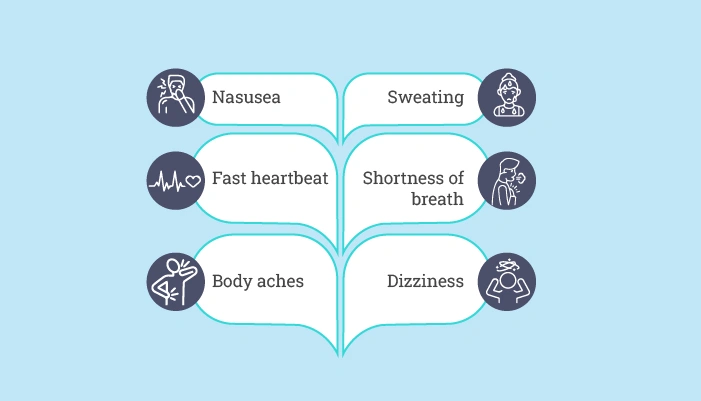
3. Physical symptoms
-
- Nasusea
- Sweating
- Fast heartbeat
- Shortness of breath
- Frequent body aches before school or a social gathering
- Dizziness
How does social anxiety disorder impact a child’s life?
Social anxiety disorder is not only about being nervous and shy in social gatherings. It severely affects the overall personality of the child and makes them self-conscious, and affects their overall abilities to perform work.
Here is how social anxiety can impact a child’s life;
1. Academic progress
Children struggling with SAD remain in their own world and only talk to people with whom they are comfortable. They avoid asking questions in class, giving answers to the questions, giving a speech, or giving a presentation in class. However, all these factors impact their overall academic progress and affect their grades.
2. Social progress
Children with social anxiety disorder tend to remain alone. They have extreme difficulty in interacting with people or making new friends. Children with SAD avail fewer opportunities and have difficulty practicing social skills.
However, all this can increase the severity of anxiety and decrease their capabilities.
3. Long-Term effects
If the social phobias remain underdiagnosed or are not treated on time, they may cause long-term effects. However, untreated SAD can also lead to the development of other mental health conditions, particularly depression or substance abuse. It is chronic conditions that last longer.
What are the Risk Factors of Social Anxiety Disorder?
Social anxiety disorder can occur from various factors. Understanding these risk factors helps individuals diagnose them earlier.
Here are some of the common risk factors:

1. Genetics
SAD is a heritable condition that runs in a family history and can be inherited. Meaning if anyone in your family is struggling due to social anxiety disorder, there are high chances that you may also develop it.
2. Environmental factors
The environment in which the child is living plays a crucial role in the overall personality and the development of Generalized Anxiety Disorder. Overprotective parents are parents who don’t let their child meet and socialize, which also hinders the ability to develop social skills.
Moreover, children who have experienced hatred, bullying can also lead to isolation and cause anxiety.
3. Traumatic Experiences
Children are very sensitive and emotional; they feel that every small aspect of life, such as humiliation in front of peers, verbal abuse, or experiencing a significant loss, can lead to social anxiety. These events hurt the self-esteem of a child and make them isolated from social activities.
4. Personality Traits
Some children have shy personalities, they remain by playing with themselves or hide when they see strangers. However, these personality traits also make the individual vulnerable to developing anxiety later in life. Also, children who think bad about themselves or have low self-esteem can also be more prone to developing anxiety.
What are the Treatment Options for SAD?
Social anxiety disorder is highly treatable with the right medication and therapeutic approaches. A mental healthcare expert sometimes recommends psychotherapy, or sometimes with the combination of medications.

1. Medications
Medication can only be prescribed by a mental healthcare expert after examining the severity of the condition.
Here are some of the medications that can be helpful
- SSRI
- SNRIs
- Beta-blocker
- Antidepressants
2. Psychotherapies
Cognitive behavioral therapy
CBT is the gold standard for managing social phobia. In Cognitive Behavioral Therapy, a mental healthcare expert listens to your child’s negative thoughts and changes them into helpful ones. CBT helps in building self-esteem and improving social skills.
However, CBT can also be performed in a group or individualized setting.
Exposure therapy
It is a form of cognitive behavioral therapy that helps individuals overcome their fears in a safe environment. However, in this therapy, a mental health care expert exposes the child to things that they fear, such as eye contact with someone, talking to strangers, speaking in class, and more. This is how direct exposure helps in reducing the symptoms of social anxiety disorder and builds confidence.
This exposure can also be performed in Virtual reality.
Nurture Your Child’s Mental Health at Renewed Mental Health Group
Mental stability matters for every individual, and children cannot express their emotions. If you see any signs of a mental health disorder in your child. Stop worrying, you are not alone! We will walk beside you on this journey.
Mental wellness starts by getting help from a mental healthcare expert. At Renewed Mental Health Group, we have a team of experts who provide the best mental health service online and in-person. Our board-certified psychiatrists perform comprehensive treatment plans tailored to the condition of your child. We provide individual and group therapy sessions in a safe and nurturing environment.
Book your consultations today!
To Wrap it All Up
Social anxiety disorder can also be called by the name social phobia. It occurs in childhood and, if left untreated, persists till adulthood. Individuals with SAD tend to remain isolated, speak less in public, avoid social gatherings, and have fewer friends as they don’t talk to strangers.
Children develop social anxiety disorder due to genetics, environmental factors, traumatic experiences, and personality traits.
Their extreme fear of being judged or embarrassed makes them avoid social events, and they don’t participate in speech & debate competitions.
Moreover, it also impacts their studies in a way that they don’t ask any questions to teachers, even if they don’t understand the exercise, they remain quiet due to fear.
It can be managed by the right combination of medications and therapies, such as cognitive behavioral therapy & exposure therapy.