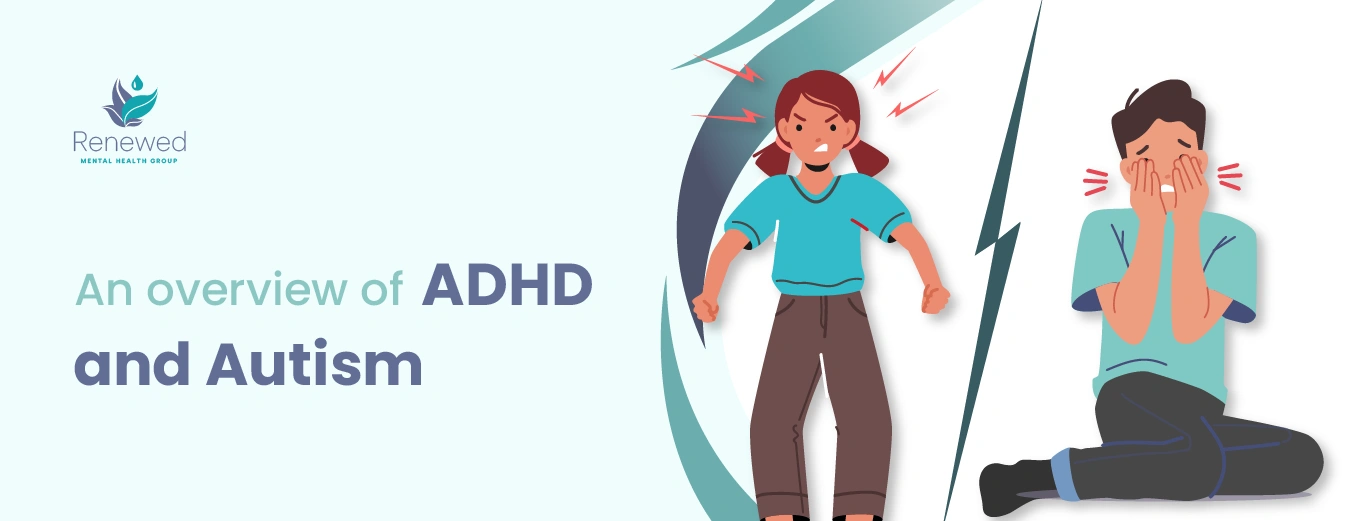



Attention deficit-hyperactivity disorder (ADHD) and Autism are two separate mental health conditions that affect the brain. Although conditions are different, they have some similarities. Let’s know more about ADHD and Autism in this article!
What is ADHD?
ADHD is a brain disorder that affects the brain structure and functioning. It causes problems with attention, communication, and hyperactivity. ADHD usually occurs in childhood, but if it remains untreated persists till adolescence.
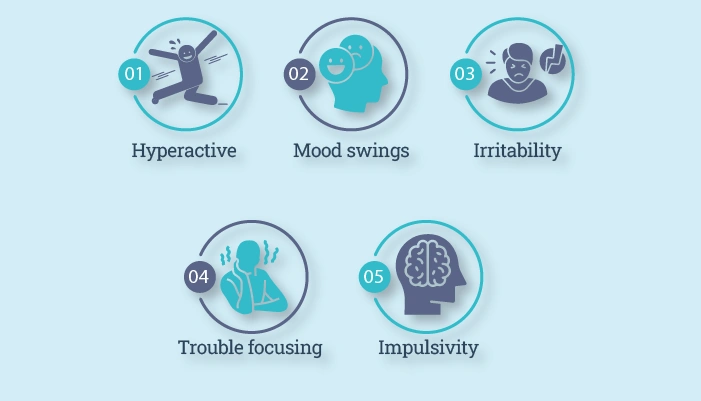
Symptoms of ADHD
Here are some common symptoms:
- Impulsivity
- Lack of organization
- Trouble focusing
- Overwhelmed
- Poor planning
- Trouble in completing tasks
- Hyperactive
- Mood swings
- Irritability
- Having difficulty managing stress
What is Autism Spectrum Disorder?
Autism is a neurological condition that affects the development of the brain. It affects the ability of a person to see the world, and causes difficulty in communication.However, it usually arises at the age of 3 and continues throughout life.
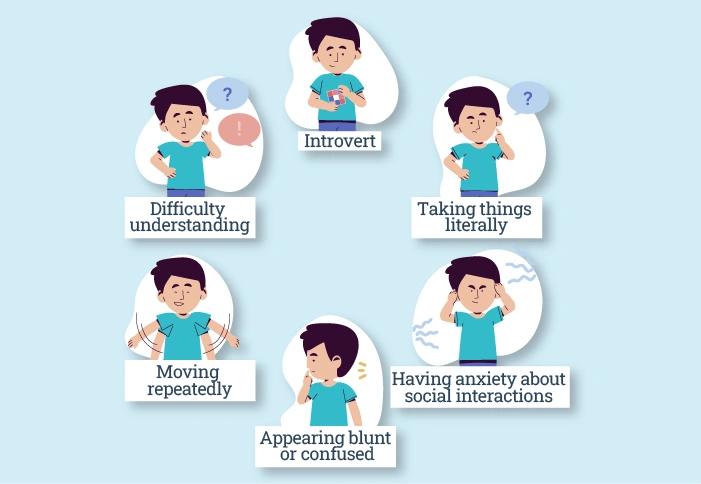
Symptoms of Autism
The symptoms of Autism include:
- Difficulty understanding
- Having anxiety about social interactions
- Introvert
- appearing blunt or confused
- Trouble in expressing emotions
- Taking things literally
- Not being able to make eye contact
- Sensory challenges
- Moving repeatedly, such as rocking or hand flapping
What is the link between ADHD and Autism?
ADHD and autism can co-occur. This co-occurrence makes life more challenging. Here is a list of some factors that may contribute to the co-occurrence of ADHD and Autism, these include:
High Heritability:
Both conditions have heritability means genetics plays a major role in the distinction of both disorders.
Shared Genetic factors:
Family history increases the risk of developing both ADHD and Autism.
Environmental factors:
Environmental factors play a key role in developing these disorders, such as low birth weight or parental stress.
Are there any similarities between ADHD and Autism?
Both conditions have many similarities these including:
Disturbance in sleep cycle:
Both conditions cause disturbances in sleeping.
Behavioral issues:
ADHD and ASD both have the same repetitive behavior and hyperactivity. Although the reason for this can be different.
Social challenges:
ADHD and autism both have trouble with social interactions and understanding social skills.
Emotional regulation:
ADHD and Autism both have trouble managing aggression and anxiety.
What are the key differences between ADHD and Autism?
ADHD and Autism have many differences that include:
| ADHD | Autism | |
| Social interaction | Individuals with ADHD have difficulty maintaining attention | Individuals with Autism show a focus on specific interests |
| Repetitive Behaviour | Repetitive behavior is not the main feature of ADHD | Individuals with Autism have repetitive behaviours |
| Sensory Processing | Sensory processing is a feature of ADHD, but not the main feature for diagnosis | Individuals with autism have sensory processing |
Co-Occurrence of ADHD and Autism
Autism and ADHD can co-occur together this condition is called dual diagnosis. Recent research suggests that individuals with Autism also meet the criteria of ADHD. The co-occurrence of these conditions impacts life seriously and makes life more difficult.
Shared Traits and Overlapping Symptoms
ADHD and autism have some overlapping symptoms and similarities that make life challenging. They both have issues with communication and impulse control, struggle to focus on tasks, and follow rules and routine.
Risk Factors and Causes
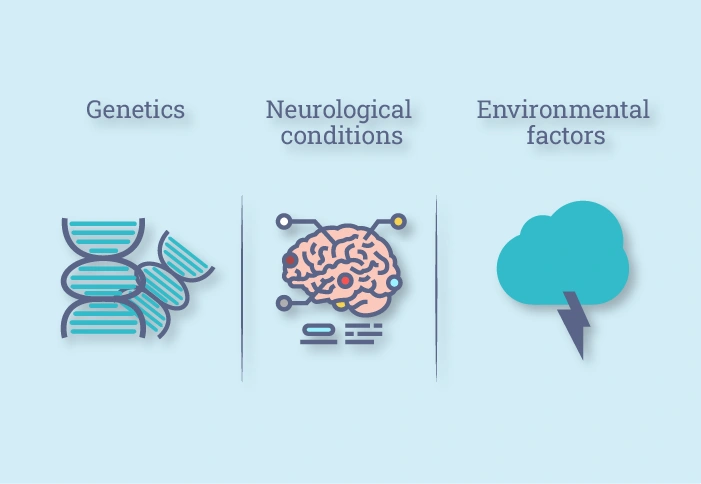
The exact cause of ADHD and autism is still unknown, but some research suggests that they both have the same risk factors that includes, genetics, neurological conditions, and environmental factors.
Genetics: Genetics plays a main role in developing any mental health disorder; it contributes to ADHD and ASD as well.
Neurological conditions: Both ASD and autism have differences in the development of the brain, such as epilepsy and cerebral palsy.
Substance abuse: If the mother used to take drugs such as alcohol and cocaine while pregnant, this may also contribute to mental health issues.
How to diagnose ADHD and Autism?
The co-occurrence of ADHD and Autism can be diagnosed by healthcare experts, they might talk to the parents and teachers as well for better assessment.
Healthcare professionals diagnose it by following these criteria:
- Clinical Evaluations
- Observations of behaviours
- Development assessment
Treatment options for ADHD and ASD
The treatment of ADHD and autism includes a comprehensive approach.
Medications
- To treat mood problems and anxiety in autism, healthcare professionals prescribe SSRIs.
- Medications like stimulants are an effective treatment to treat ADHD.
- Healthcare professionals prescribe non-stimulant medications if stimulants are not working properly.
- Antipsychotics can be beneficial to treat irritability and anger in autism and ADHD.
Therapies and strategies
A Healthcare professional recommends to follow therapies with medication for better outcomes.
Therapies include:
Cognitive behavioral therapy (CBT):
CBT works as a treatment for anxiety and social skills. This therapy is very beneficial for both ADHD and Autism.
Behavioural Therapy:
As we already know, ADHD and Autism have problems with behaviour. To improve these behavior-related issues, healthcare professionals suggest to get behavioral therapy, which controls the hyperactivity and aggression.
Applied Behavioral Analysis:
ABA focuses on improving communication and helps reduce challenging behaviour in Autism.
Social Skills Training:
People suffering from this co-occurrence have problems with social gatherings; by this therapy, they develop social skills and learn how to interact and communicate.
Parent Training:
Parent training can be beneficial for parents developing strategies to deal with their child’s behaviour and help them to support their child’s needs.
You are not alone! Get professional help today at Renewed Mental Health Group
Today, let this be the day to showcase your first step toward better health and recovery. Mental health starts with believing in yourself and accepting the true you. It’s not a race to compete, it’s a lifestyle, a higher approach to living a fulfilling life, and preparing yourself for a better tomorrow. At Renewed Mental Health Group, our experts help you in every phase,Using evidence-based and holistic treatment, you can find pathways to embrace emotional and social equilibrium and enrich your lives in recovery.We are just a call away!
Final Thoughts
ADHD and Autism are two separate mental health conditions, usually occur in childhood; they both have common similarities that can confuse individuals.Medication and therapies are available to help reduce the symptoms, both conditions are treatable. It’s really tough to live with these conditions, common traits that also overlap are trouble in communicating, social interactions, and behavioral problems.People with Autism and ADHD can live a fulfilling life if they get their treatments properly. If you are looking for expert guidance and help, book your consultation today at Renewed Mental Health Group.