


Many individuals, after experiencing a traumatic event, struggle with negative emotions, thoughts, and memories of the incident. While we often assume that it can be PTSD, there is a more immediate psychological state that occurs shortly, known as Acute Stress Reaction (ASR).
The word ‘acute’ means quickly, which means the symptoms develop quickly, within a few
days or a week, and last for a shorter period of time. It’s an intense, prolonged, mental or psychological distress that can develop after experiencing a tragic event.
According to the US Department of Veterans Affairs, approximately 6 to 33% of the population is bound to experience acute stress at some point in their lives.
However, understanding this condition earlier can help in early treatments. Many people are able to re‑regulate, process the distressing thoughts, and prevent longer‑term mental health concerns from developing.
Understanding Acute Stress Reaction
An acute stress reaction is a short‑term response to a sudden or overwhelming distressing incident. It occurs when the nervous system is pushed beyond its capacity to cope and shifts into a survival state. It usually occurs within minutes of the tragic event and lasts for a few days to a month. People in this state may experience feelings of fear, anxiety, flashbacks, helplessness, or avoidance, and some physical reactions. These feelings and reactions are normal and can occur at any time in this condition.
However, if the symptoms persist for more than one month, it can also lead to Post Traumatic Stress Disorder (PTSD).
Core Symptoms of Acute Stress Reaction
The symptoms vary from person to person, but often include the following:
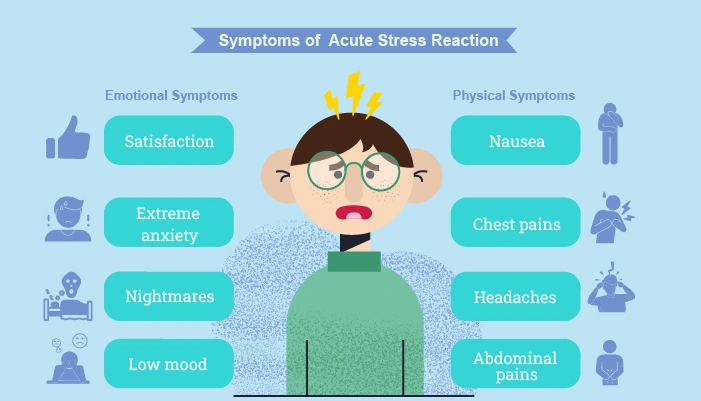
Emotional Symptoms
- Inability to feel joy, satisfaction, or in love
- Feelings of numbness
- Avoiding thoughts or memories which reminds about the traumatic incident
- Social anxiety
- Irritability
- Extreme anxiety or panic
- Low mood
- intrusive memories
- Anger outbursts
- Restlessness
- Disorientation
- Psychological Symptoms
- Insomnia
- Nightmares
- Distractibility
- Hypervigilance (abnormally alert to surroundings)
- Detachment from self and emotions
- Dissociative amnesia (memory gaps about important information)
- Distressing memories, such as nightmares
- Recurrent unwanted dreams
- Reckless behavior
Physical Symptoms
Physical symptoms occur as the excessive stress releases the stress hormones, such as adrenaline, in response to the acute stress reaction.
Here are some of the physical reactions:
- Palpitations
- Nausea, which is the urge to vomit
- Chest pains
- Headaches
- Abdominal pains
- Trouble with breathing
What are the Causes of ASR?
Acute stress reactions are usually triggered by witnessing or experiencing stressful life events that involve threatened death, serious injury, or sexual violence. People who experience sudden crises in life are also prone to developing ASR.
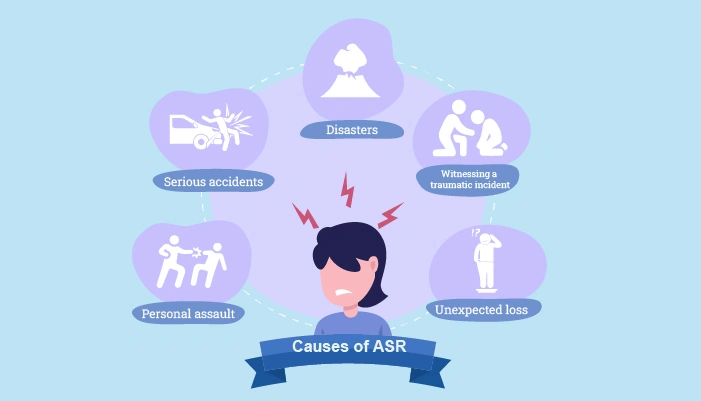
Primary Causes and Traumatic Triggers
- Personal assault, such as rape, robbery, or being threatened with a weapon.
- Serious accidents that threaten death
- Disasters like earthquakes, floods, fires, or explosions.
- Witnessing a traumatic incident
- Being exposed to repeated or extreme traumatic details.
- Unexpected loss of a loved one.
- A “breaking point” after prolonged stress, followed by an overwhelming, tragic incident.
Biological Response
The prolonged stress impacts the brain. There is a region in the brain that is part of the threat-detection system, named the amygdala, and the hormones that activate the fight‑or‑flight response. The release of stress hormones leads to heart palpitations, breathing, and muscle tension to prepare the body to respond.
Moreover, when the brain pushes beyond its usual coping capacity, it leads to psychological symptoms like panic, numbness, and dissociation.
Risk Factors that Increase the Vulnerability of Developing ASR
Some of the factors that increase the vulnerability of developing an acute stress reaction include:
- Already struggling with anxiety, depression, or other mental health conditions.
- Lack of social support after experiencing a tragic incident.
- Perceived helplessness during a traumatic incident.
How does Acute Stress Reaction Impact Life?
ASR is a natural, temporary response to perceived threat or pressure. It causes intense physical and emotional symptoms, which lead to severe challenges in managing work, relationships, and other daily life activities.
The extreme stress leads to several difficulties, such as lack of sleep, restlessness, intrusive memories, decision-making, and lack of concentration, which severely impact everything around. They remain avoidant, irritated, numb, and isolated, which significantly impacts their relationships with partners and family members.
Moreover, it also severely impacts physical health as extreme stress can lead to heart palpitations, high blood pressure, and other physical health issues. Also, some people get addicted to substances in order to get short-term relief from stress, which eventually increases the vulnerability of the condition.
Furthermore, if it remains untreated, it can lead to long-term mental health issues, such as PTSD, depression, and anxiety.
Acute Stress Reaction Vs PTSD
ASR and post-traumatic stress disorder (PTSD) are reactions to tragic incidents, but they both have significant differences. Although they both have similarities in symptoms, this confuses the diagnosis of the condition.
Here are the differences between the two:
| ASR | PTSD |
| ASR typically begins immediately after the trauma and lasts from 3 days to 1 month | The symptoms manifest up to 6 months after the trauma and last for more than 1 month. |
| It is often viewed as a transient, normal reaction rather than a formal psychiatric diagnosis. | It is a debilitating psychiatric condition. |
| It’s a short-term condition | It’s a long-term condition |
| It can be diagnosed with 9 of 14 symptoms from any symptom cluster | PTSD has specific criteria for the diagnosis, as they require 4+ symptom clusters |
| ASR can be an early phase that evolves into ASD and PTSD, and settles with support | It is long term severe condition that requires proper treatment. |
When to Seek Help?
Seek immediate support from a mental health professional if the symptoms are persistent and causing distress in everyday life activities.
Furthermore, urgent intervention is required if you are facing any of these:
- If there are thoughts of self‑harm, suicide, or risk of harm to others.
- Severe chest pain, trouble breathing, or collapse occur, as these may signal physical emergencies.
- If there is extreme confusion, disorientation, or inability to care for basic needs, especially if accompanied by aggression.
How can Acute Stress Reaction be Diagnosed?
There is no test available to diagnose the condition. It can only be diagnosed by a mental health professional, using the Diagnostic and Statistical Manual of Mental Disorders, 5th Edition (DSM-5) criteria. They conduct an interview with the person who is suffering and also with the family members, and do questionnaires about the medical and mental health history.
Additionally, they check the timeline of the symptoms; if the symptoms are present from 3 days to 1 month following exposure to a traumatic event. It can be diagnosed as an acute stress reaction. Also, the diagnosis requires at least nine symptoms across intrusion, negative mood, avoidance, and more.
Treatments of Acute Stress Reaction
Acute stress reaction is extremely curable with the right combination of medication and therapies. A mental health expert focuses on stabilizing the patient and preventing them from chronic conditions like PTSD. There are two suitable ways you can do that. In terms of psychotherapy (talk therapy) and medications.
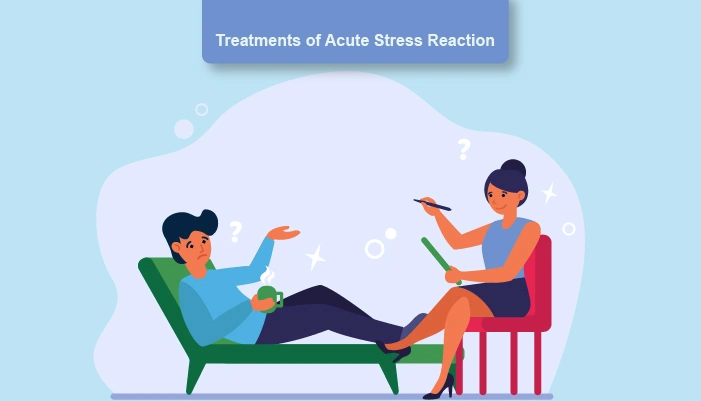
Here are some of the common treatment methods that can be helpful:
A Trauma-Focused CBT (Cognitive behavioral therapy)
Trauma-Focused CBT is considered to be a gold standard treatment for treating ASR. It’s a short-term psychotherapy that usually requires 12 -25 sessions, where the person who is suffering tries to overcome the negative patterns that lead to problematic behavior. TF-CBT can be used to treat acute stress disorder symptoms or anything related to some kind of stress reaction, for that matter. It stabilizes trauma narration and cognitive processing to manage the symptoms and helps by providing coping skills. It involves education on how your body responds to trauma and stress, symptom management skills, identification, and reframing of problematic thinking patterns.
Exposure Therapy
Exposure therapy is also helpful in managing trauma and stress. It helps by reducing the risk of developing PTSD. It involves controlled, gradual exposure to traumatic memories or situations to facilitate fear, lessen avoidance, and process trauma-related distress. As the people with acute stress reactions may avoid things or situations that they associate with the tragic incident. Through this, patients overcome their fears, which helps in reducing the symptoms of ASR.
Eye Movement Desensitization and Reprocessing (EMDR)
It also helps by reducing the symptoms of trauma. It helps by using bilateral stimulation (like guided eye movements) to help the brain reprocess traumatic memories.
Additionally, when it comes to medication, Selective serotonin reuptake inhibitors (SSRIs) or Serotonin and norepinephrine reuptake inhibitors (SNRIs) can help. As they both tinker with neurotransmitters in our brain to induce positive effects, they can be used. Medications with a combination of therapies provide better results.
Get Compassionate Support at Renewed Mental Health Group
If you or any of your loved ones are experiencing the Acute stress reaction or any other mental health condition, you are not alone!
Renewed Mental Health Group walks beside you in this journey. You will find a team that listens to you, understands your condition, and supports you without judgment. We personalize our care according to your needs, and help you regain a sense of control and hope. Our highly expert team is dedicated to helping you by providing exceptional care with multidisciplinary approaches.
You can also get treatments from the comfort of your home through our telepsychiatric services. If you are unsure where to start, reaching out to us is the first step towards feeling better and rebuilding your life.
Connect with us today!
Wrapping up!
In summary, while an acute stress reaction is a natural biological response to overwhelming trauma, it should not be ignored. The primary distinction between ASR and PTSD lies in the timeline and duration of symptoms. By recognizing the physical and psychological signs early, individuals can access trauma-focused CBT and social support systems that facilitate natural recovery. Ultimately, understanding ASR is not just about identifying distress; it is about taking the proactive steps necessary to protect long-term mental health and prevent a temporary crisis from becoming a chronic condition.