


Childhood is romanticized as a period of safety, learning, and growth. However, for some, it can also be a period of emotional pain and hardship. It can leave scars that remain far into adulthood, as childhood experiences have the strongest impact on who we become as adults.
Childhood is a pillar upon which we build our personality; it shapes the way of understanding the world around us, our relationships, feelings, and thoughts. According to the National Council for Mental Wellbeing research, more than 70% of American adults have experienced trauma.
Childhood trauma is not just a difficult memory; it’s a physiological process that lingers long after it’s over. The early traumatic events are strongly linked to social, emotional, and cognitive impairment throughout the lifespan. However, many people carry this wound throughout their lives without even realising it.
To understand what childhood trauma is and how it can affect us, read this article!
What is Childhood Trauma?
Childhood trauma happens when children experience distress and emotional stress where they feel scared, helpless, or horrified. It severely impacts their emotional, cognitive, and physical development.
Children are way more sensitive than one may think. Simply yelling, ignoring, or bullying can also have a big impact on their lives. Moreover, trauma is not about the event itself; it’s about how a child’s mind interprets it.
According to research by the National Child Traumatic Stress Network (NCTSN), it is defined as an event that exceeds a child’s internal and external resources for coping. These events can be actual or threatened death, serious injury, or sexual violence. However, this trauma not only occurs when a child experiences an event themselves, but also when a child is exposed to traumatic events, such as disasters, accidents, witnessing violence, and growing up in an unsafe environment, or neglect from parents can also lead to trauma.
Related Article : What is Trauma Dumping? 7 Reasons Why People Dump Traumas
How Childhood Trauma Affects Even In Adulthood?
Children remember every little detail that makes them feel scared or traumatized. Early traumas change how the brain develops. In a healthy environment, the brain develops a balance between logic and survival. Trauma intervenes and disrupts this balance, leaving the brain in a state of stress. Here is how unresolved trauma impacts adult life.
1. Neurological Rewiring
Neurological rewiring often dictates how the brain responds to trauma and excessive stress. Here is how the brain works during chronic stress:
- Amygdala: It is the part of the brain that becomes hypersensitive because of extreme stress. As an adult, one may feel constantly on edge or overreact to minor stressors as if they are life-threatening.
- Hippocampus shrinkage: This part of the brain stores memories. Unresolved trauma can shrink the hippocampus, leading to memory gaps or intrusive flashbacks and nightmares where the past feels like the present.
- prefrontal cortex: This area of the brain helps in making decisions and helps in emotional regulation. It gets weak due to excessive stress and trauma, and people struggle with impulsivity and concentration.
2. Unresolved Childhood Traumas Impact Relationships
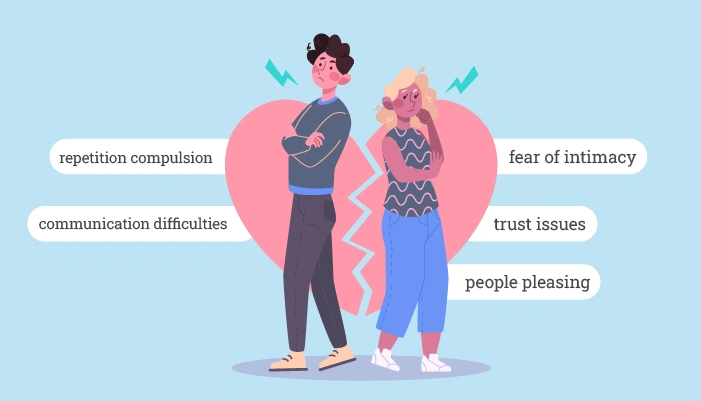
Unresolved early life trauma may cause extreme issues in day-to-day life as an adult.Different symptoms & health problems may be experienced. It causes difficulty establishing relationships, which leads to several issues, including:
1. Fear of intimacy
People experiencing this condition don’t feel close to people, as they have a fear of being betrayed. They withdraw when someone gets too close because vulnerability feels dangerous.
2. Trust Issues
They have extreme trust issues because they might have witnessed incidents like betrayal from caregivers or parents in childhood. So this leads them to mistrust their partners and friends in adulthood, even if they prove their loyalty.
Learn More: Paranoid Personality Disorder: Symptoms, Causes, and Treatments
3. People Pleasing (Fawning)
People who have experienced abandonment and being in a state of stress in childhood have pleasing habits. It is because they feel like they can over-accommodate others to avoid conflict, often at the expense of their own boundaries.
4. Repetition Compulsion
Adults who had a very hard childhood often choose partners who act like the people who raised them, even if it isn’t healthy. This tendency stems from a deep desire to resolve the original pain linked to those early experiences.
5. Communication Difficulties
Childhood trauma can severely affect a person’s ability to communicate effectively in relationships. It is because they may not have the opportunity to express their feelings in childhood. As a result, they may struggle to communicate their needs and emotions in adult relationships, which leads to misunderstandings and conflicts.
3. Emotional and Psychological Struggles
Unresolved traumas often lead to chronic mental health conditions. Here are some of the mental health conditions that arise due to childhood experiences.
1. Depression and Anxiety
Children who have been through hard times, stress, and trauma are more prone to depression and anxiety. They often remain sad, hopeless, fearful, and in a free-floating dread.
2. Low Self-Worth
Childhood experiences make them feel like they are unworthy of being loved or unworthy of doing anything right. They may remain in this cycle of internalized shame, that they are bad and unworthy.
3. Emotional regulation
Children who experience trauma may have extreme difficulty managing their emotions. They may be overwhelmed by feelings of fear and anxiety.
4. Physical Health Consequences
Trauma not only affects the brain, but it also causes severe consequences for physical health as well. Here are some of the common physical issues that arise because of this condition:
1. Autoimmune and Inflammatory Issues
Extreme persistent stress affects the immune system and leads to inflammatory issues, such as lupus or multiple sclerosis (MS).
2. Chronic Pain
Chronic pain, such as headache, migraine, and fibromyalgia, also occurs if one goes through extreme stress in their life.
3. Cardiovascular Issues
Trauma can be triggered anytime, leading to severe consequences. It causes higher rates of heart disease and hypertension in adults.
5. Behavioural Issues
Unresolved childhood trauma can also result in various behavioural issues, such as:
1. Aggression
People who have been through childhood trauma may adopt aggressive behavior as a defense mechanism.
2. Self-Harm
The unresolved trauma made one engage in self-harming activities to cope with difficult feelings.
3. Risk-taking behaviors
People in this state engage in risky behaviors, such as reckless driving or substance abuse, to cope with difficult thoughts.
What are the Types of Childhood Trauma?
Trauma is not always a single “shattering” event. It is generally categorized by its duration and its nature. “Adverse Childhood Experiences” (ACEs) is considered to be the gold standard for listing types of trauma. However, it can be broken down into three main functional categories, which include:
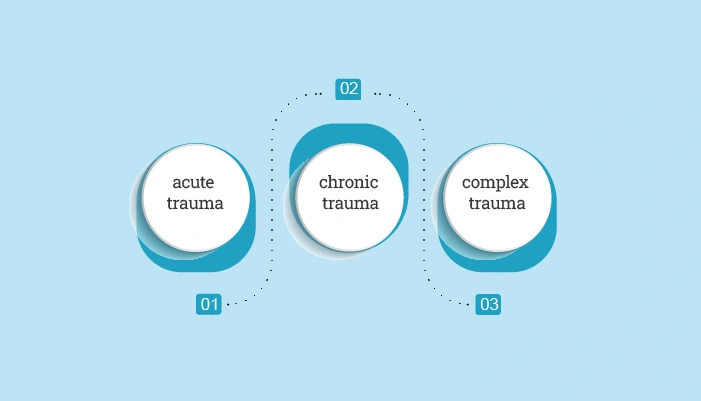
- Acute Trauma: It is a result of a single distressing event, such as an accident or natural disaster, physical assault, or a sudden medical emergency.0
- Chronic Trauma: this involves repeated and prolonged exposure to distressing events, like domestic violence, bullying, living in a war zone, chronic physical or sexual abuse, and chronic neglect.
- Complex Trauma: It occurs due to exposure to varied traumatic events, often within the caregiving system. For example, a child being neglected or witnessing domestic violence. It disrupts the child, and they don’t feel safe, even with their parents and caregivers.
What are the Symptoms of Childhood Trauma in Adults?
Childhood trauma doesn’t go away as we grow old; instead, it stays by our side. The symptoms of unresolved trauma in adulthood can lead to various cognitive, emotional, and behavioral issues. Here are some of the common symptoms:
Cognitive Symptoms
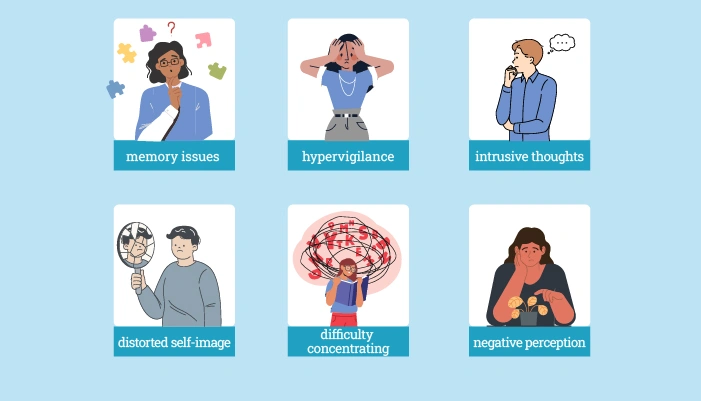
Cognitive symptoms impact the brain’s processing and its ability to perceive the world accordingly. Some of the common cognitive symptoms of childhood trauma include:
- Memory Issues
- Hypervigilance
- Intrusive Thoughts
- Distorted Self-Image
- Difficulty Concentrating
- Negative perception of the world
Emotional Symptoms
Unresolved trauma often leads to emotional dysregulation. Where feelings are overwhelmed, or there are no feelings at all.
- Disconnection from emotions
- Intense shift in mood
- Chronic guilt or shame without any reason
- Fear of abandonment & Clingy
- Loss of interest in activities that one may have enjoyed
- Trouble identifying feelings
Behavioral Symptoms
Behavioral symptoms act as a coping mechanism to overcome trauma and internal pain.
These include:
- Failing to set boundaries to avoid conflict or rejection.
- Finding a temporary “ease” from emotional pain by engaging in substance abuse.
- Withdrawing from friends and family.
- Avoiding people, places, or conversations that might trigger a traumatic memory.
- Reacts to minor inconveniences.
How To Heal from Childhood Trauma?
Healing from this condition is possible; there are four pivotal stages of healing, which include: recognition, acknowledgment, processing, and recovery.
Recognizing your feelings is the first step toward getting closer to treatment. In this moment, one may realise that their emotional and cognitive issues are because of unhealed traumas rather than personality traits. After recognizing, one may acknowledge the pain they have been through as a child, which has been suppressed for a long time. Acknowledging and accepting feelings of sadness helps in the healing process.
Moreover, individuals may process their harsh feelings, where they may go back to the past, feeling where they were traumatised. Then occurs the recovery stage, which helps in staying in the present, meaning the traumatic memories have no control over you.
Coping Strategies
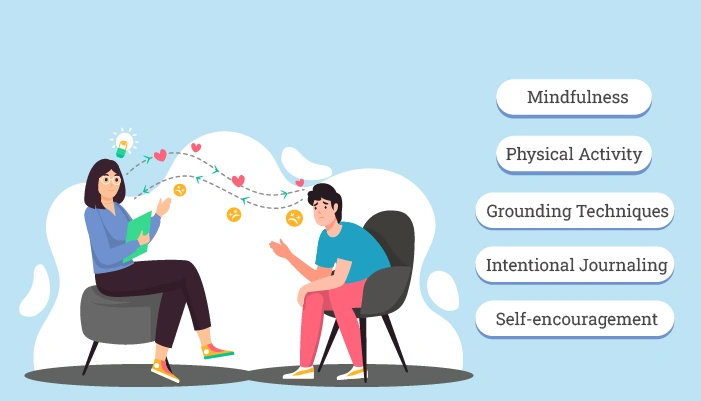
Coping techniques are helpful for adults who are dealing with childhood trauma. A combination of emotional regulation techniques, self-care practices, and professional treatments usually provides the best results.
Here are some of the effective coping strategies that help in resolving childhood traumas:
- Mindfulness
- Grounding Techniques
- Intentional Journaling
- Physical Activity
- Self-encouragement
- A Strong Support Network
- Importance of Professional Support
Therapeutic Approaches
Therapeutic approaches are evidence-based strategies specifically designed to help people regain control of their lives. Here are some of the common therapies that help in managing unresolved childhood traumas:
1. Trauma-Focused Cognitive Behavioral Therapy (TF-CBT)
This therapy is helpful for children and adolescents (ages 3-18). It is helpful for people who are struggling with trauma-related emotional or behavioral difficulties. It focuses on the link between thoughts, feelings, and behaviors. It is divided into three distinct phases, which include stabilization, where a therapist educates the parents, trauma processing, where the therapist helps the child challenge and correct distorted beliefs, & consolidation, where one may gradually face real triggers.
2. Dialectical Behavioral Therapy (DBT)
DBT is helpful for people who are experiencing emotional distress, which is a very common symptom of childhood trauma. It balances “acceptance” of who you are and helps in changing the problematic behaviors. It teaches how to handle the “emotional storms” that trauma leaves behind before you even try to talk about the memories themselves.
Furthermore, the trauma is stored in the nervous system. It can go away with the right combination of treatments with the help of professional support. Most of the time, a mental health expert adds Somatic Experiencing or EMDR alongside CBT or DBT, which helps “reset” the body’s physical alarm system that triggers the trauma.
Begin Your Path to a Healthier Mind at Renewed Mental Health Group
Childhood trauma is a complex condition that has lasting effects. However, with the right, appropriate intervention and support, healing is possible. Remember that it’s never too late to ask for help.
At Renewed Mental Health Group, we have a team of professional experts who provide compassionate treatment to address many mental health issues, including childhood trauma. Our team is dedicated to helping you by providing effective, life-changing treatments. You can also get treatments from the comfort of your home through virtual appointments.
Find simple solutions for your complicated emotions!
Book your consultations now!