


Eating disorders are complex mental health conditions that involve intense, severe disturbances in eating behaviors. It leads to difficult thoughts and emotions and damages a person’s physical, mental, emotional, and social well-being.
This disorder leads one to do compulsive behaviors, such as restrictive eating, avoiding certain foods, binge eating, self-induced vomiting, or excessive exercise. It occurs in ways that appear similar to an addiction.
Approximately 28.8 million people in the US struggle with an eating disorder at some time in their lives. This disorder is more common in women, but only a few of them can get treatment.
However, these disorders can affect people of all genders, body sizes, ages, socio-economic classes, and racial backgrounds.
Additionally, if not treated effectively, eating disorders can become long-term concerns and, in some cases, can cause death.
Understanding Eating Disorder
The term “eating disorder” refers to a group of conditions where an eating behavior threatens a person’s health. It severely affects physical and emotional health and the relationship with food, which can be life-threatening. Every individual’s experience with this disorder is different and varies depending on its type.
Most of these disorders involve focusing too much on weight, body shape, and food. This can lead to dangerous eating behaviors. These behaviors can seriously affect the ability to get the nutrition your body needs. It can also harm the heart, digestive system, bones, teeth, and mouth.
Moreover, it can also lead to other mental health conditions such as depression, anxiety, self-harm, and suicidal behaviors. Usually, people think of eating less as a lifestyle choice, but it’s not; instead, it’s a mental health illness that can be treated.
What Causes Eating Disorders?
The causes of an eating disorder are beyond food and weight. It occurs from a complicated interplay of factors rather than a single cause. It may not be triggered by one cause, but combinations of biological, psychological, environmental, and sociocultural factors can increase the risk.
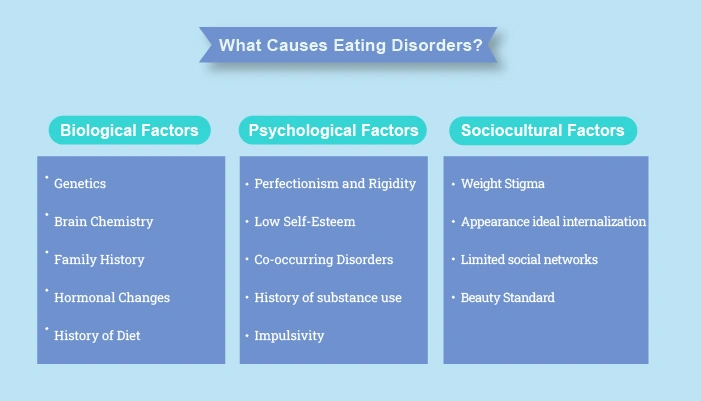
Here are some of the common factors that increase the vulnerability:
1. Biological Factors
Some of the people are born with a higher susceptibility to developing these disorders, and this plays a major role!
- Genetics: Genetics plays a significant role in the development of this disorder. It means people who have a close relative who struggles with this disorder are up to 10 times more prone to develop this condition. The distinctive genes may influence temperament and reward processing.
- Brain Chemistry: The differences in brain chemicals, such as neurotransmitters like serotonin and dopamine, often function differently in people who are struggling with eating disorders. This can affect how a person perceives hunger, fullness, and the “reward” of eating or fasting.
- Family History: individuals who have a family history of mental health problems like anxiety, depression, or eating conditions, are further susceptible through inherited traits.
- Hormonal Changes: Significant hormonal shifts during pregnancy, or other life stages, can serve as biological triggers, altering both brain chemistry and body image.
- History of Diet: Individuals who have a history of dieting and deliberate efforts to restrict the amount or type of food they eat are also prone to developing this disorder later in life.
2. Psychological Factors
These disorders often serve as a dysfunctional coping mechanism for drastic emotional pain. Some of the common psychological factors include:
- Perfectionism and Rigidity: A compulsive urge for flawlessness, high self-expectations, and poor body image are common traits of these disorders. Most people think that when life feels messy, controlling food intake can provide a sense of accomplishment.
- Low Self-Esteem: It’s a belief that one may not be enough or not worthy of anything. This belief leads people to tie their entire self-worth to their physical appearance, which eventually leads them to control their food intake and makes them prone to developing eating disorders.
- Co-occurring Disorders: Usually, people with these disorders also struggle with other mental disorders, such as anxiety, depression, OCD, or PTSD. The eating disorder may emerge as a way to “numb” or manage the symptoms of other mental health conditions.
- Personal history of a substance use disorder: people who are dependent on alcohol or illicit drugs also struggle with these conditions. People who use substances are 11 times more at risk of developing eating disorders compared to the general population.
- Impulsivity: Taking actions without thinking of the consequences, especially when experiencing negative emotions, is also linked to an increased risk of binge or purge disorders.
3. Sociocultural Factors
Sociocultural influences the individuals, as we live in a culture where thinness correlates with health and success.
- Weight Stigma: Weight stigma is discrimination against a person’s weight, and is damaging and pervasive in society. People with larger bodies remain in intense fear of fatness, which eventually makes them stop eating to avoid social judgments.
- Appearance ideal internalization. Idealizing the person’s appearance may increase the risk of developing eating disorders, which leads them to restrict food consumption in order to achieve the idealized appearance.
- Limited social networks: Living alone and socially isolated can lead to stress, which makes one vulnerable to binge disorder. Many people with this disorder report having fewer friends and social activities, and less social support.
- Beauty Standards: Promoting digitally altered body standards creates an impossible ideal that most people can’t naturally achieve. It eventually leads to body dissatisfaction and eating disorders.
4. Environmental Factors
Some of the environmental factors that increase the vulnerability of developing this condition include:
- Trauma: People who have experienced traumas, such as physical, sexual, or emotional abuse, and childhood trauma. Controlling the desire for food can also increase the risk for the development of all types of eating disorders.
- Bullying: Being bullied about weight or appearance, especially during early formative years, can leave deep psychological wounds. It is manifest as disordered eating later in life.
- Major Life changes: Significant lifestyle changes, such as a divorce, moving to a new place, or starting a new job, can create a level of stress that triggers the development of this disorder.
What are the Symptoms of Eating Disorders?
Some of the common signs that may help in identifying these disorders include the following:
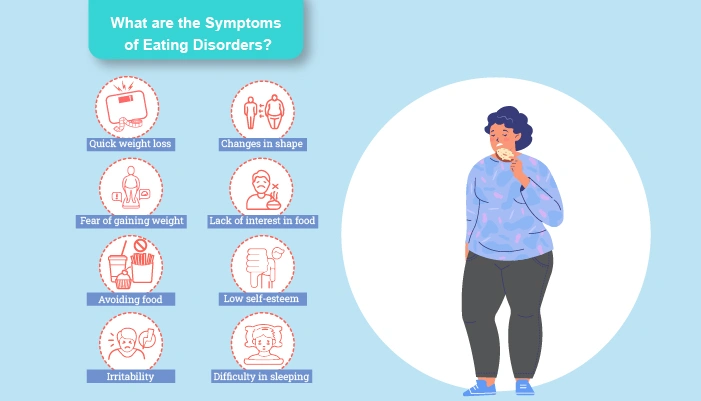
- Quick weight loss or an increase in weight
- Changes in shape
- Feelings of unhappiness with body shape and size, or certain body parts
- A drastic fear of gaining weight
- Worry, avoidance, or lack of interest in food or certain types of foods
- Staying in a state of denial of being hungry
- Avoiding food and eating in social situations
- Excessive physical activity such as exercising
- Avoiding particular foods, such as meat or dairy products
- Developing food rituals, such as always using the same bowl
- Cutting food up into tiny pieces, or eating slowly
- Low self-esteem
- Irritability
- Difficulty in sleeping
Note: Individuals can become obsessed with particular foods or lose weight for lots of reasons. It can be because of medical or physical health conditions. If you feel like you might be experiencing this condition, get help from a professional mental health expert.
Types of Eating Disorders
It has several types, and each type has its own symptoms and experiences.
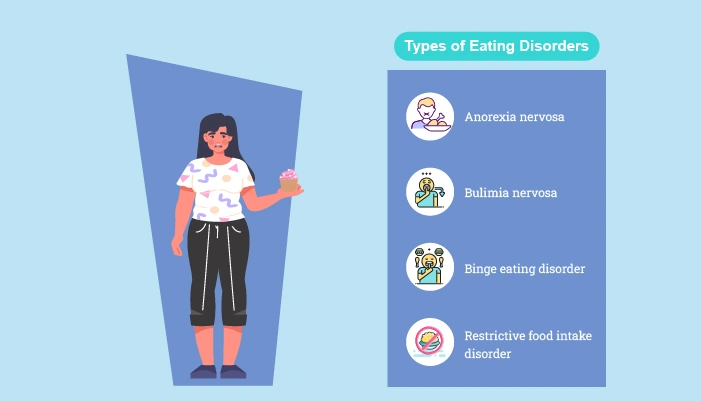
Here are some of the common types, which include:
1. Anorexia nervosa
It can be a life-threatening type of eating disorder, as it leads to low body weight. People in this state remain in intense fear of gaining weight and have a view of weight and shape that is not realistic. It usually involves using extreme efforts to control weight and shape, which often seriously interfere with health and daily life.
However, the efforts to reduce weight can cause severe health problems, even for people who regularly eat, or for people who have an extremely low weight.
2. Bulimia nervosa
It is also a serious and potentially life-threatening disorder. People in this state attempt to control their weight by excessively exercising, vomiting, or periods of strict dieting. Sometimes bulimia also causes severely limited eating for a particular period of time.
During this, individuals feel like they have no control over their eating patterns and that they can’t stop their urge to overeat. This often leads to stronger urges to binge eat and then purge.
3. Binge eating disorder
People in this particular state have less time. When bingeing, it feels like there’s no control over eating. During this, people may eat food quickly or eat more food than they plan. Even when not being hungry, eating may continue long past feeling uncomfortably full.
After a binge, individuals usually feel a great deal of guilt, disgust, or shame because they are unable to control their eating urge. This leads to increased urges to binge, setting up an unhealthy cycle. Embarrassment can lead to eating alone to hide bingeing.
4. Avoidant/restrictive food intake disorder
It involves extremely limited eating or not eating. It severely impacts everyday life activities and health, such as problems with growth, development, and daily functionality.
Additionally, people in this particular state may not be interested in eating or may avoid food with a certain color, texture, smell, or taste. It can occur at any age, but is more frequently diagnosed in adulthood. Also, not eating healthy food can lead to major health problems.
When to Seek Professional Help
If you feel like the symptoms are getting worse and cannot be managed on their own, get help from a mental health professional immediately. Sometimes people can have problem eating behaviors that are similar to some symptoms of an eating disorder, but the symptoms don’t meet the guidelines for a diagnosis of this disorder.
A mental health professional diagnoses the condition by using DSM-5 (Diagnostic and Statistical Manual of Mental Disorders, Fifth Edition) criteria and then recommends treatments as per the severity of the condition. If you have problem eating behaviors that lead to distress or affect your life or health, get immediate support.
How a Mental Health Professional Can Help?
It is a highly curable condition with the right combination of medication and therapy. A mental health expert combines psychotherapies, medications, and some lifestyle changes. Some of the common therapies that help include:
Cognitive behavioral therapy, it is considered to be the best treatment for eating disorders as it helps by changing the thoughts that lead people to avoid food. CBT intervenes in the thoughts and changes them into helpful ones. Also, Group therapy is a helpful technique in dealing with these disorders, as people feel isolated and alone. It helps them to meet people with the same mental disorders, which eventually encourages them to stay consistent with their treatments.
These disorders may also coexist with other mental health conditions, which is why mental health experts recommend psychiatric medications. Some of the common medications that can help include antidepressants, antipsychotics, or other medications that may improve these conditions.
Moreover, mental health experts also urge people to maintain a healthy lifestyle for better, more effective results. These include maintaining social connections, staying actively involved, and more. The best approach is often a combination of treatment options.
A mental health expert offers a comprehensive treatment plan that will be best for your unique condition. They address the physical, mental, and behavioral aspects of the condition.
Reclaim Your Mental Well-being at Renewed Mental Health Group
Untreated disorders can be life-threatening! If you or any of your loved ones experience symptoms of an eating disorder, help is available.
At Renewed Mental Health Group, we have a team of dedicated professionals who help you regain your emotional well-being and overcome eating disorders. Our certified experts provide group and personalized treatments to help you navigate challenges and harness your inner strengths.
You can also get your treatments from the comfort of your home through our telehealth services.
Connect with our experts today!